14 April 2016 · Jaime Lerner Arquitetos Associados studio, Curitiba, Brazil
Jaime Lerner: innovation is simply starting
An evening conversation with the architect of Curitiba in his studio: the birth of bus rapid transit, living close to work, the courage to start, and why mobility and the economy cannot be separated.
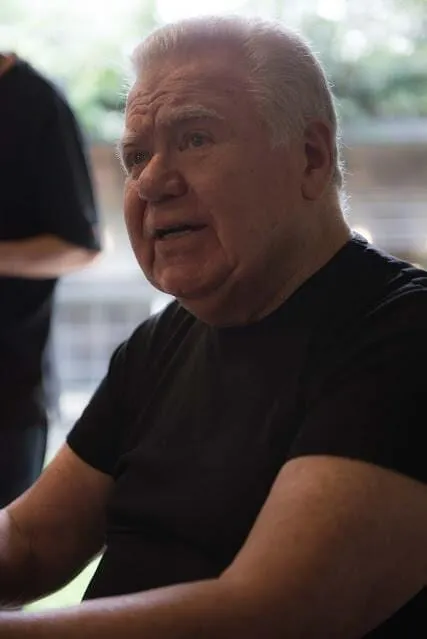
Jaime Lerner is an architect in the Brazilian city of Curitiba and a living legend for anyone involved in urban planning. In three years, he has done in the city what other mayors take 30 years to do.
Curitiba has been called the “green capital” of Brazil and the “greenest” city in the world, with no traffic jams, no rubbish and no poverty.
Urbanist Mihail Veklenko met Jaime Lerner at his workshop in Curitiba.
The first time I came to Brazil in April 2016, after São Paulo - the economic centre of the country - I was lucky enough to get to the world-famous city of Curitiba. A kind of Mecca of transport workers, all those who are looking for new solutions for urban mobility. A city that has confirmed in life the expression that success is when willingness meets opportunity. In 1971, architect Jaime Lerner became its mayor. He proposed innovative solutions and, thanks to a favourable political and economic situation, was able to realise them.
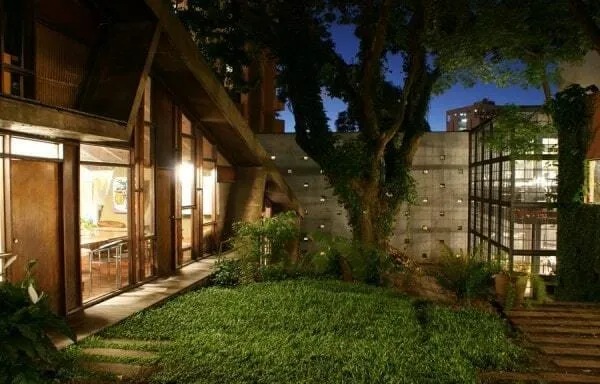
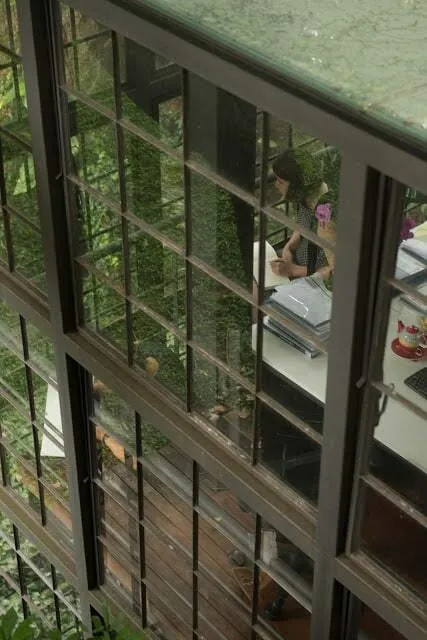
On my unplanned trip to Curitiba, I had not even dreamed of meeting Jaime in person, but when I heard from friends that the legendary architect’s studio was a couple of blocks away, I realised that I should not miss this opportunity. The studio is two small buildings on the base of a private house, in a neighbourhood with low-rise buildings. A green courtyard and two cosy buildings with spacious interiors and a workshop where the team of architect Lerner works. Incidentally, next to the workshop is a bar where Jaime often relaxes and has his private table. This is one of the fun stories of the city. It’s not the table that was allocated to the former mayor and governor, it’s a table that Lerner himself brought to the bar, which is why it’s always reserved for him.
My friend Gabriel called the workshop and arranged a meeting for 6:00 pm that evening. It was raining that evening, we met at home and drove together to Jaime Lerner’s office. For about one hour I managed to chat with one of the legendary men of contemporary urbanism.
J. L.: Hello!
M. V.: Hello!
J. L.: So you work as a planner?
M. V.: Not exactly. I am neither a planner nor an architect; I am an economist by first education, and I continued my studies in urban and territorial management in Moscow at Shaninka under the University of Manchester programme. My main experience is in urbanism; we set up a public organisation called Urban Factory in my hometown and started promoting projects to develop Rostov-on-Don in various areas: transport, architecture, historical heritage, public spaces, development of industrial areas, media projects.
J. L.: I have been to Russia many times. In Moscow, Perm, St. Petersburg. I love St. Petersburg very much and I am happy that my trip fell outside the cold season. I had a wonderful time in your country and I plan to visit St Petersburg again. I still travel a lot despite my age. It’s not so easy anymore, but I’m not worried about aeroplanes. The problem is not the planes, the problem is the airports. The worst airport in the world is in São Paulo. I don’t really have much choice, as I always fly out of São Paulo when I’m travelling. I could use the airport in Rio, but from Curitiba it’s easier to fly through São Paulo. It’s one big shopping centre, not an airport, there’s little space and huge distances. I hate São Paulo.
The city used to be a place of the avant-garde, but that time has passed. The problem is that now there is no, shall we say, “intelligent life” there. People don’t like their city.
M. V.: But São Paulo is not so bad, is it? Sure, it’s not as well organised as Curitiba, but still…..
J. L.: The city used to be a place of the avant-garde, but that time has passed. The problem is that now there is no, shall we say, “intelligent life” there. People don’t love their city. At the same time, in Rio people love the city, the taxi drivers there know everything! And in São Paulo, people don’t know the city and don’t like it. They spend a huge amount of time in traffic jams. Our office is now working on an agglomeration project in Rio. There are twenty-one municipalities in the city, which means a lot of work, paperwork and bureaucracy.
M. V.: Is this a kind of application of the Curitiba experience or something completely different?
J. L.: It’s completely different. I think when we talk about mobility, we refer to Curitiba because it was the first city in the world to implement a bus rapid transit system. Now this system is used in 250 cities around the world. Then this experiment was set up in Bogota, the capital of Colombia, where Mayor Enrique Peñalosa did a very good job. Then the same thing happened in Seoul in Korea, Istanbul in Turkey, Mexico City in Mexico, now Rio, many cities in China and Europe.
M. V.: Aren’t they trying the same system in São Paulo?
J. L.: In São Paulo they are trying it, but the concept is different. It’s the same in the north-east of Brazil, in Recife. If Curitiba has 100% dedicated lanes, buses in both São Paulo and Recife share the road space with cars.
The problem of São Paulo… you know, this city itself is not that complicated, the problem and the complications are in the minds of the people. Those people who want to “sell” the city, who are involved in real estate, in commerce. If you want to show them a simple idea in São Paulo, they won’t accept it. It’s bound to be complicated, because it’s São Paulo…..
M. V.: It sounds like you don’t like São Paulo?
J. L.: I hate São Paulo! When you talk about mobility, you have to apply a few very simple things. Firstly, use the car less. But to do that, it’s important to have a good public transport system. Secondly, live close to your work. Because otherwise you spend hours travelling. You don’t have to forget that there are six million cars in São Paulo, and each car requires twenty-five square metres to park near your home and the same amount near your work.
M. V.: So if you multiply fifty square metres by six million, it turns out that the city needs three hundred million square metres just for parking…..
J. L.: I would say that fifty square metres is comparable in size to a small flat or office. Instead of six million cars, you can make it so that work is close to home. That will reduce transport problems. And it’s the same situation everywhere I’ve spoken and talked about mobility. Everyone makes the same mistake when they ask about new technologies, driverless cars and so on. They forget that these technologies utilise existing urban space. The concept of “living near work” works much better than all the latest technology and the use of the latest devices. These people are just using new ideas to sell some of their technologies and products.
You can’t just take a bus stop from one place to another because it causes a public outcry.
M. V.: But how did you implement all this here in Curitiba? Even when you become mayor, you still have to go through the bureaucracy. It’s not enough to have a good idea for a transport system, you also have to calculate the economics.
J. L.: I don’t remember. I’m too old, it was a long time ago. All I remember is that it was very complicated. You can’t just move a bus stop from one place to another because there is a public outcry. And to make these changes in all the systems of the city… You can imagine how difficult it was and how much resistance we met.
M. V.: Do you believe that at that time political unity gave certain advantages for the realisation of your ideas?
J. L.: No. At that time, mayors had very little influence. I was appointed for the first time and that meant that I could be asked to step down the very next week. So we had to work very quickly. I often said to my team: we might not be in these positions next week. I remember the night we launched the rapid transit system. We launched after midnight to see if everything was working well. And I was saying to the driver: look, you probably don’t realise it, but what you’re starting now is likely to be a whole new way of moving people around in cities. And now when I’m walking around the city and I meet him, he always honks twice at me, greeting me.
M. V.: How do you feel now these days in Curitiba as you observe the results of your work?
J. L.: I left politics fourteen years ago, having decided that I had done enough in this field. Working in my city is what makes me happy. I’m changing the way people behave and the way they feel in the city.
M. V.: The people here are very nice. Yesterday when we flew into town, the airport taxi driver was so happy, he was just enjoying life. Regardless of who he is where he is or what position he holds. Very cheerful, friendly, relaxed and happy. He truly enjoys life for no particular reason. And so everywhere we ask for directions to somewhere, people are very happy.
J. L.: And you know why? - Why? - Because we’re Russian! (laughs). I love Russian culture, it’s very sentimental. When I was president of the international union of architects, I often visited many countries. There were one and a half thousand of us architects, that is, one and a half thousand egos.
M. V.: We have just flown back from India. I think you can imagine the difference between the chaos that is going on in the cities of India, especially the big cities, and the peace and tranquillity that we are seeing now in the cities of Brazil. Have you ever been to India?
J. L.: Yes, I have been to Mumbai, a very difficult city. I’ve also been to Goa and some other places. India is complicated by its political system, because the mayor does not have full power. There is a city parliament: they inherited that system from the British because all the former colonies try to get as far away from centralising power as possible. You can see this in other countries as well. When you look at other countries, most of them have centralised power.
M. V.: And here in Brazil, when you’re the mayor, do you have a lot of power?
J. L.: Yes, full autonomy. But these are terrible times in the country.
M. V.: Because of the economic crisis or impeachment?
J. L.: Because of everything.
M. V.: I think this is a permanent crisis. We happen to live in an era of crisis. Should we attach such importance to it then?
J. L.: Yes, but now everything is somehow particularly complicated. “Ta Russo”, although in translation it means something very complicated. It was much better three years ago. (The expression “ta russo” means “in Russian”, used in speech to show something complicated, confusing, difficult - note).
Never stop doing what you have to do. You must have the courage to go through a crisis. You can’t just waste time during a crisis.
M. V.: Don’t you think the crisis is a time of opportunity?
J. L.: Of course, never stop doing what you have to do. You have to have the courage to go through a crisis. You can’t just waste time during a crisis.
M. V.: But do you feel better now because you are out of politics? Or in times of crisis, do you still have the desire to go back and use your skills again?
J. L.: No, I would like to help if I could, but politics has become so dirty. I left politics in a very timely manner. There’s an expression: “enough is enough.” I don’t regret being a politician, and I’m happy that I had the chance to be mayor and governor. I liked being mayor more because it involves being close to the people. It was the best time of my life, I was younger, but also because being a mayor involves working directly with people.
M. V.: Is Brazil now applying the Curitiba experience? I don’t mean just bus rapid transit lines, but the full-fledged Curitiba experience, is it now being disseminated throughout the country?
J. L.: It’s complicated because of bureaucracy and politics. And also because it’s too simple a solution. Every mayor thinks, “since it’s so simple, I should have guessed it myself. Why should I apply these ideas in my city?”… And the problem is that they all want to find excuses why they don’t apply these solutions. And they want to have all the answers. But you can’t always be the guy who knows everything and solves everything. Planning a city is a trajectory where you have to leave space for people to correct you if you’re doing something wrong. Innovation is nothing more than just getting into action. It’s important to have the courage to start, and then you can make improvements little by little. But it’s always a story about experience along the way. We learnt a lot by doing it ourselves. We’ve learnt a lot in the process. Sometimes I get really annoyed when I see solutions and they don’t apply them.
Innovation is nothing more than simply getting into action.
M. V.: In Curitiba or outside of Curitiba?
J. L.: In other cities. Curitiba has always been committed to innovation. And when you stop innovating, you see that people want more and more, but that can still be fixed. It is not that difficult to achieve this new quality in the public transport system. It’s not that difficult. We are working on ideas for Curitiba.
M. V.: So you are still working on ideas for Curitiba now?
J. L.: It’s not my job, but I love Curitiba, so in our office we keep working on ideas for the city. I can only recommend, because I’m no longer in the top position in the administration. But you know, it’s hard enough to work with people who tend to say that there are no solutions left. This example applies in São Paulo, where they are convinced that there are no solutions for the city better than the ones they have already applied. And they are very proud when they say this. They almost have an orgasm when they say that São Paulo has so many solutions and there are no others left. And you say that no, there are actually solutions, they don’t believe you or often just ignore you. Because they like this state of affairs where there are no solutions. They like to say that São Paulo is so big that there are no solutions for it.
The vehicle uses wheels on tyres but drives on a rail in the middle, and then there is no need to use a driver. The bus can move completely on its own on the rail, but still on tyres. Runs better, quieter, more efficiently.
M. V.: You have applied a beautiful design and well-designed cylinder-shaped stations, doors that open jointly at the station and on the bus. The system is over thirty years old. I understand that you used high platform stations to make it more convenient for passengers to board and disembark, on the same level. Now that we have low-floor buses available, we can use this system with a different station design, can’t we?
J. L.: Yes, of course. We used the shape of a cylinder, because two stations in the shape of a rectangle on the street look like small houses. And the cylinder looks like a link, a connection. But in new cities, mayors want to create their own special designs for cities, so different cities use different shapes. We designed square stations for São Paulo, for example, just so there would be some distinction. We designed more comfortable stations that are appropriate for São Paulo. In Curitiba, we designed the cylinder so that all the infrastructure, such as air conditioning, is located under the floor. Although it is not necessary now, Curitiba has become not as hot a city as it used to be. In Rio, for example, they use air conditioning.
M. V.: Well, look, for example, when we did projects in my city, we had no power and influence, because a public organisation has no power from the beginning. We started to promote certain solutions for the city, like building bicycle lanes or extending the tram network. And when I was asked questions - “What is the value, why develop public transport and cycle lanes?” I always tried to explain the benefits and how it works. For the most part, however, both business and government are focused on economic efficiency; they don’t see the economics in public transport. Then I explained that the transport system in a city is equivalent to the circulatory system in the human body. Mobility is nothing but economy, because the speed of processes is the rhythm of the city. This is economic activity, that is, mobility directly affects the economy. But in the end, I was never able to convey this connection to the majority. So my question to you is, could you share your experience and observations on the relationship between urban transport and economic development of a city?
J. L.: The interconnectedness is ubiquitous. When economics is separated from people, any city, state or country faces disaster. Curitiba has always been an example, the structure - living, working, travelling and leisure - all together. For the most part in the US, they separate work from living. They don’t have that sense, that feeling, and as a result, when they face a certain problem, they solve only that problem, when another problem arises, they solve only that problem. This is American pragmatism, but in the city the concept is very important. So life, work, movement and leisure should go in parallel, it is very important. Because if I design the city of Curitiba, it will look like this. (drawing)
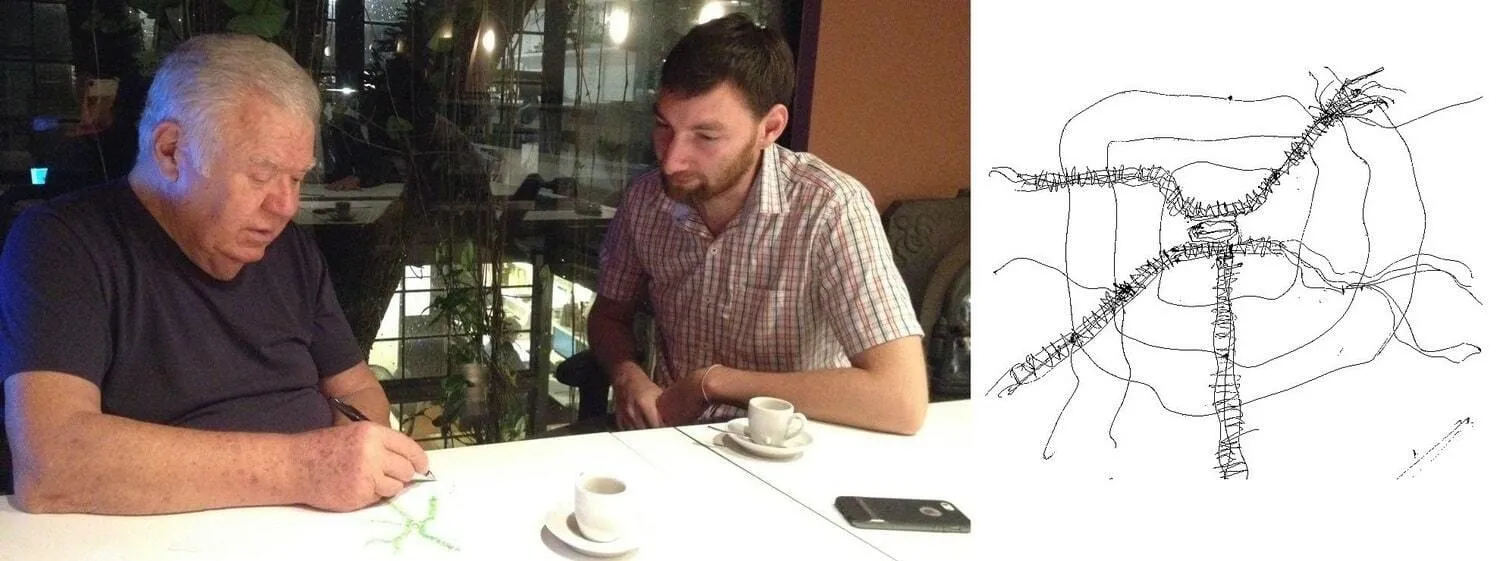 Jaime Lerner draws the structure of Curitiba’s transport system for Mihail Veklenko
Here is the centre, then there are integrated lines, trunk lines. It is important to have better public transport in places where the population density is higher. By focusing on the densest places in the city, the system can quickly show its effectiveness. Curitiba has two million six hundred thousand passengers per day. Two million people live in the city and another 2.5 live in the agglomeration. In London, the most complex and oldest underground system serves 3 million people a day. It is a complete system, interconnected, and therefore the same number is larger because the system involves comfortable transfers and using multiple buses per journey. It’s not just a corridor, it’s a complete system throughout the city. The stations, the buses. We have now designed a new system. I believe it is the most modern and efficient to date. When a vehicle uses wheels on tyres but travels on a rail in the middle, and then there is no need to use a driver. The bus is completely able to move on its own on the rail but still on tyres. It works better, it’s quieter, it’s more efficient. It’s a very simple thing to do. I think this is going to become very important in the near future, because as soon as you have a bus rapid transit system, you try to improve it. You can already see examples of the system I described in Paris and Shanghai. The fact that you intend to develop a public transport system based on the tram in your city is very right, because the tram is not as costly as the metro. At the same time, it is a more stable, reliable system and it can be automated as much as possible.
M. V.: Mr Lerner, it was a very informative meeting. I hope we can apply your recommendations in our city.
J. L.: Thank you, it was a pleasure chatting with you. I hope I will be able to visit your city one day.
 Jaime Lerner
 Jaime Lerner’s studio
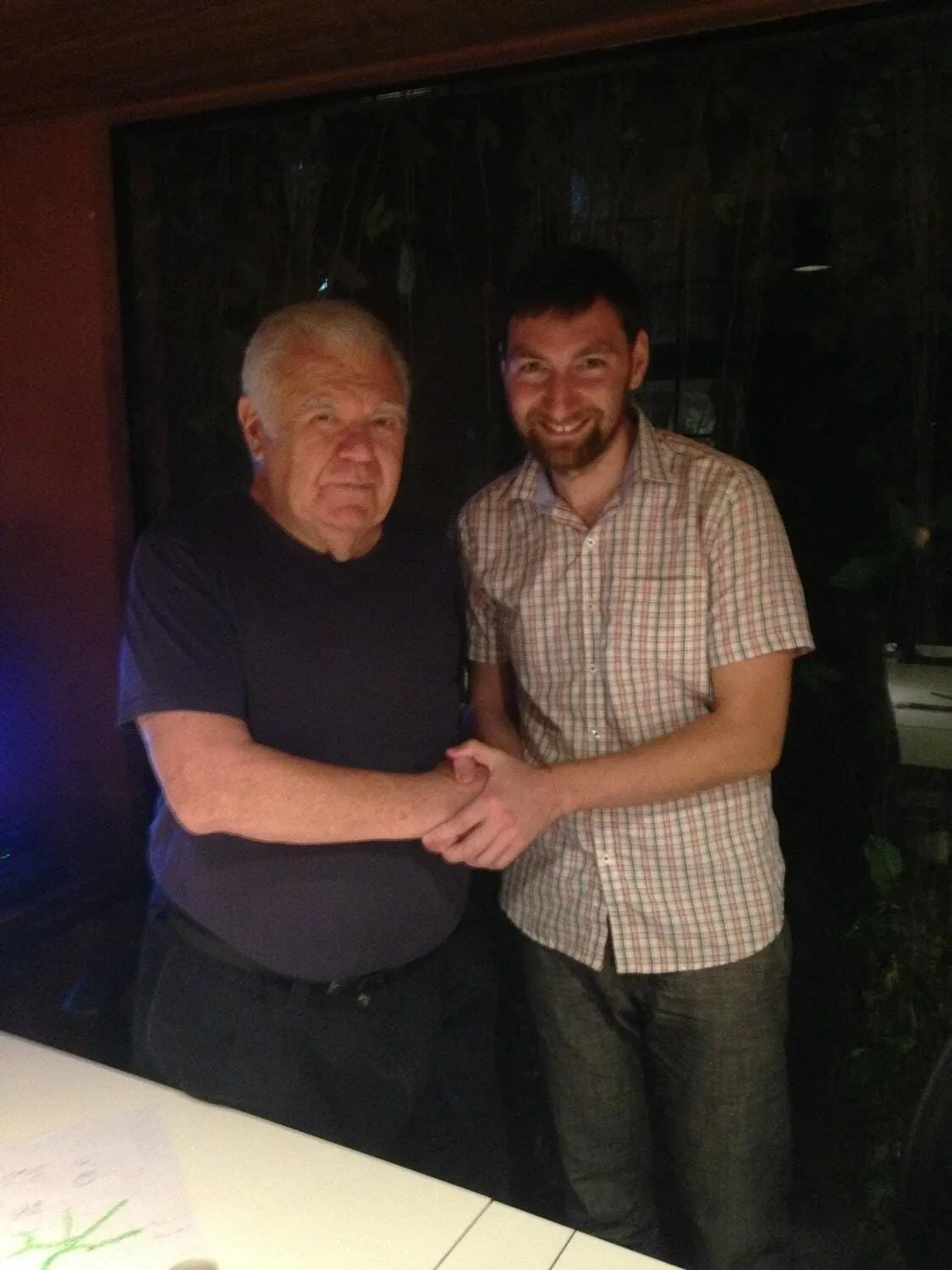 Jaime Lerner and Mihail Veklenko after the conversation
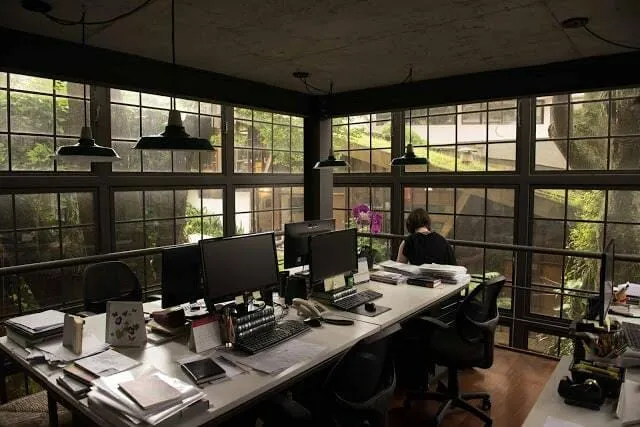 Inside the studio, where Lerner’s team works
About Jaime Lerner
Jaime Lerner (1937–2021) was a Brazilian architect and urban planner. He served three times as mayor of Curitiba between 1971 and 1992 and was twice elected governor of the state of Paraná (1995–2002). Under his leadership Curitiba launched its express bus system with dedicated lanes, widely regarded as the world’s first bus rapid transit, later complemented by the city’s distinctive tube stations, and became known for its pedestrian streets, new parks and recycling programmes. From 2002 to 2005 he was president of the International Union of Architects (UIA). He is the author of the book Urban Acupuncture, and his studio, Jaime Lerner Arquitetos Associados, worked on projects for cities in Brazil and around the world.